
· Dana Whitfield
How to Gate Check a Car Seat (Step by Step)
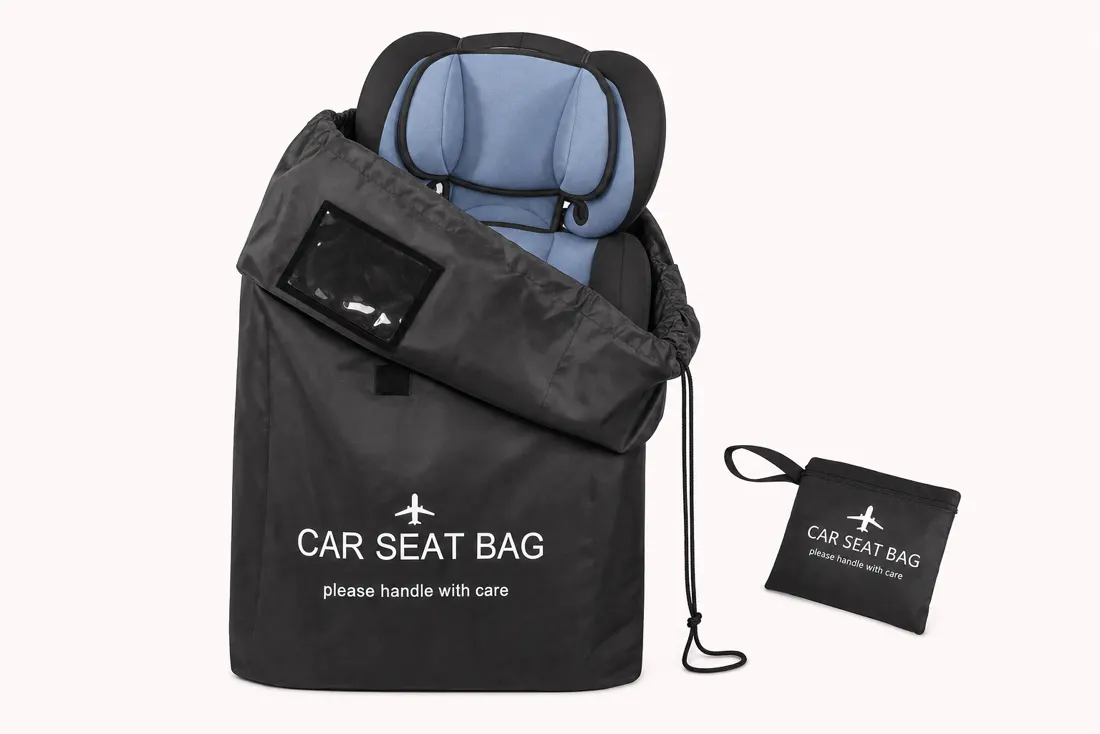
The first time I gate checked a car seat, I handed it over naked at the boarding door and watched from my window as it sat on an open cart while the ramp crew loaded strollers on top of it. It survived, barely, with black scuffs ground into the fabric. Sixty-plus flights later, my routine takes ninety seconds and the seat arrives looking like it did at home. Here is the exact process.
What gate checking actually means
Gate checking splits the difference between carrying on and checking a bag. You keep the car seat with you through security and the terminal, then surrender it at the boarding door instead of the ticket counter. It rides in the cargo hold with the strollers and comes back either at the jet bridge when you land or at baggage claim, depending on the airline and airport.
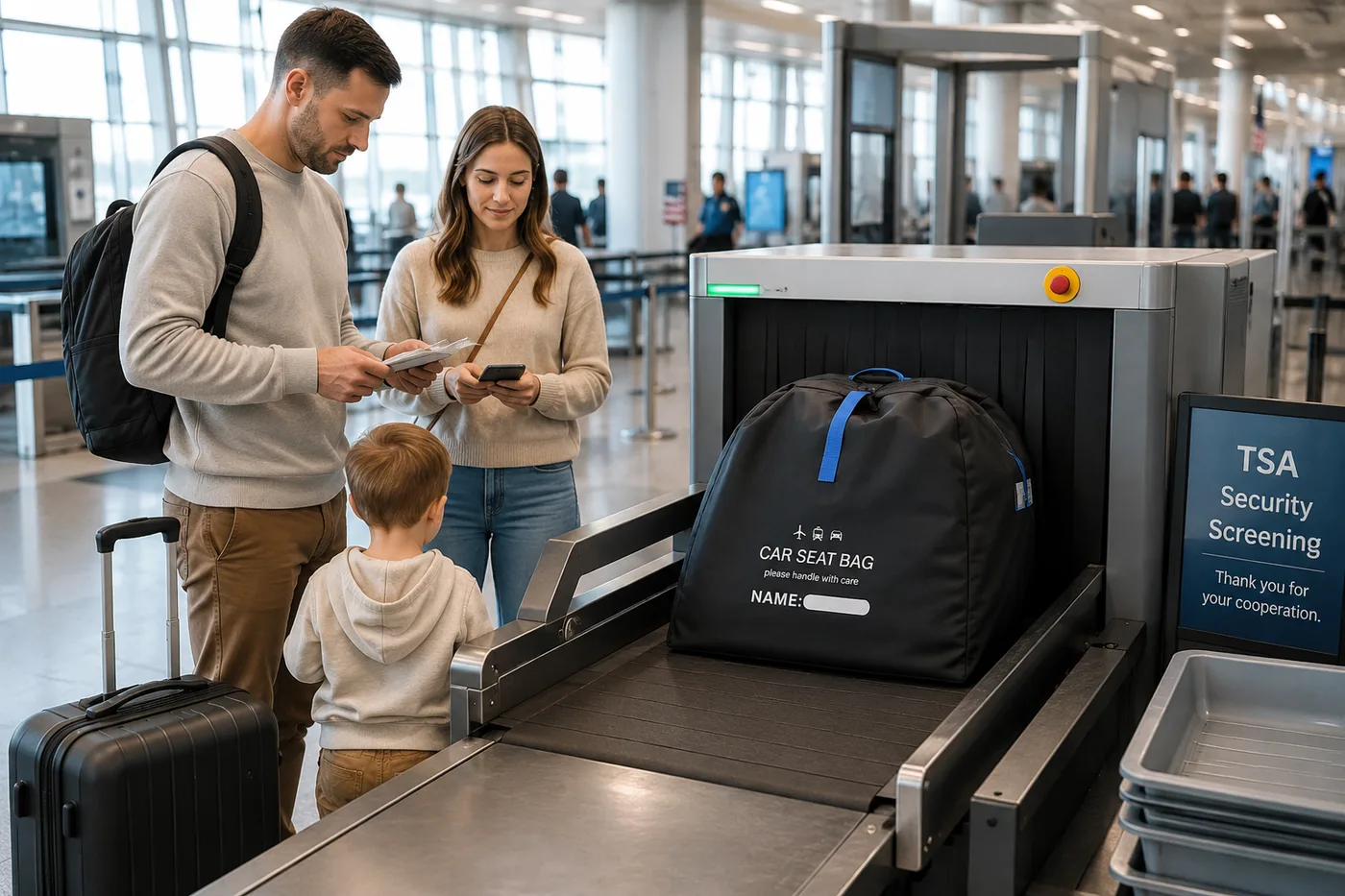
It costs nothing on the majors — American, Delta, and United all transport car seats and strollers for free (airline policies, 2026), and the seat does not count against your baggage allowance. Full details in do car seats fly free?
Why bother keeping the seat until boarding instead of checking it at the counter? Because a car seat is useful right up to the last minute: a contained toddler at the gate, a familiar nap spot during a delay, and a seat you can install in the cabin if the gate agent offers you an empty spot next to you. That last one has happened to me twice — see the cabin option in my complete guide to flying with a car seat.
Step 1: get the gate check tag
You need a tag before the seat goes anywhere. Two places to get it:
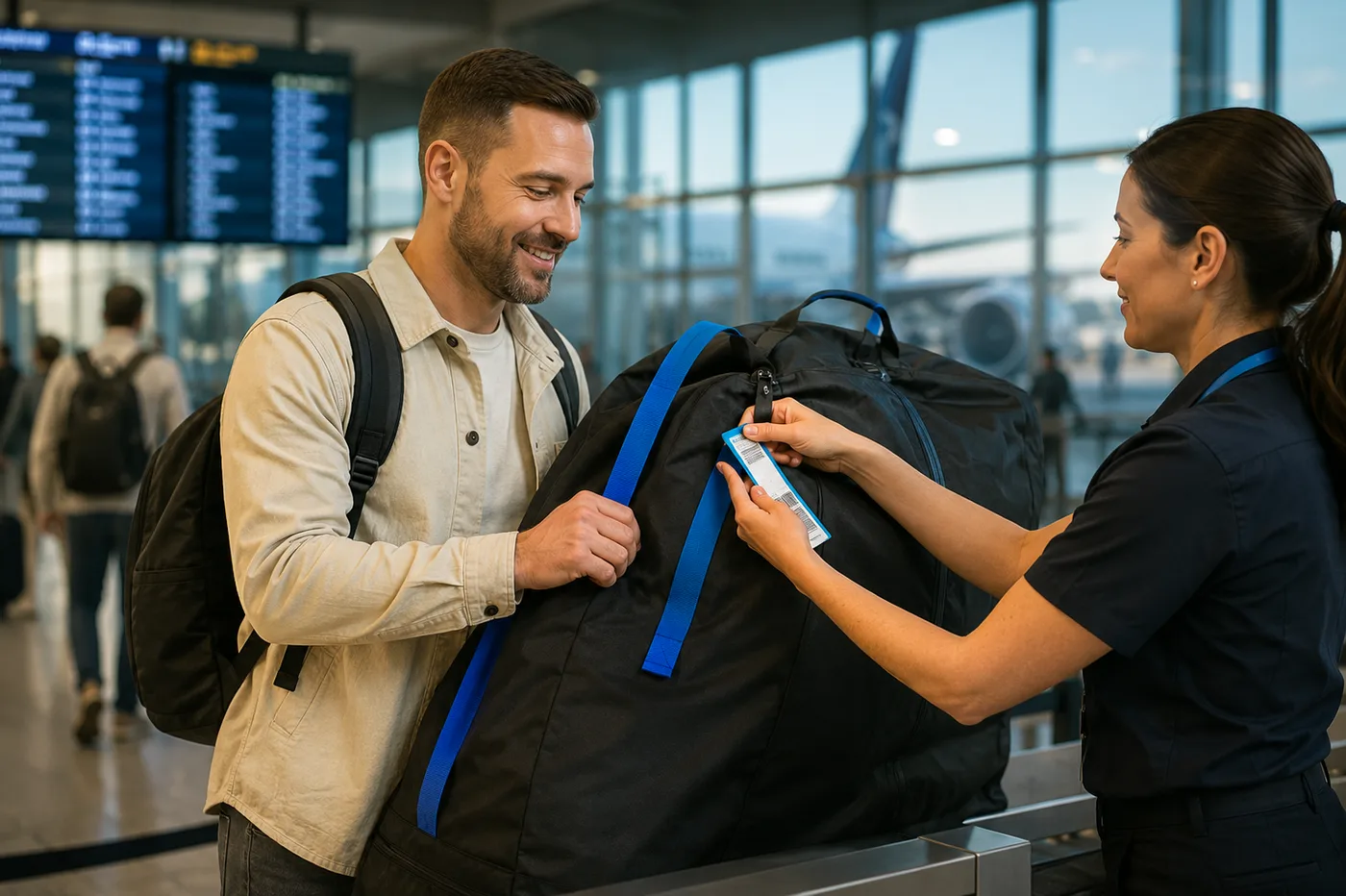
- At check-in or bag drop. My preference. Ask the counter agent for a gate check tag for the car seat, and you skip the podium line entirely.
- At the gate podium. Ask the gate agent when you arrive at the gate, not when boarding starts — the podium line grows fast once the first group is called.
The tag is a long adhesive strip or an elastic loop tag. Loop it through the bag's carry handle, not around the zipper pull, so it cannot slide off when the bag is lifted.
Step 2: bag the car seat
This is the step most parents skip and most parents regret. A gate-checked seat still travels in the hold, still crosses the tarmac in an open cart, and still gets stacked. SITA's Baggage IT Insights counted 6.9 mishandled bags per 1,000 passengers in 2023 — and gate-checked items take the same ride as everything else below deck. With a typical convertible listing at $200 or more (manufacturer prices, 2026), the math on a $24.95 bag is not hard.
My routine with the SeatPorter Car Seat Travel Bag, timed at well under a minute:
- Tuck the harness straps and chest clip inside the shell so nothing dangles or snags.
- Pull off cup holders and clip-on toys — anything loose becomes a projectile in the hold.
- Stand the seat upright, pull the bag down over it like a pillowcase. At 33 x 17 x 17 inches it takes infant seats, toddler seats, and full convertibles — check your model on our fit pages for Graco and Britax.
- Zip the bag fully closed, top to bottom. Water-resistant Oxford cloth shrugs off a rainy tarmac, but only if the mouth of the bag is actually shut.
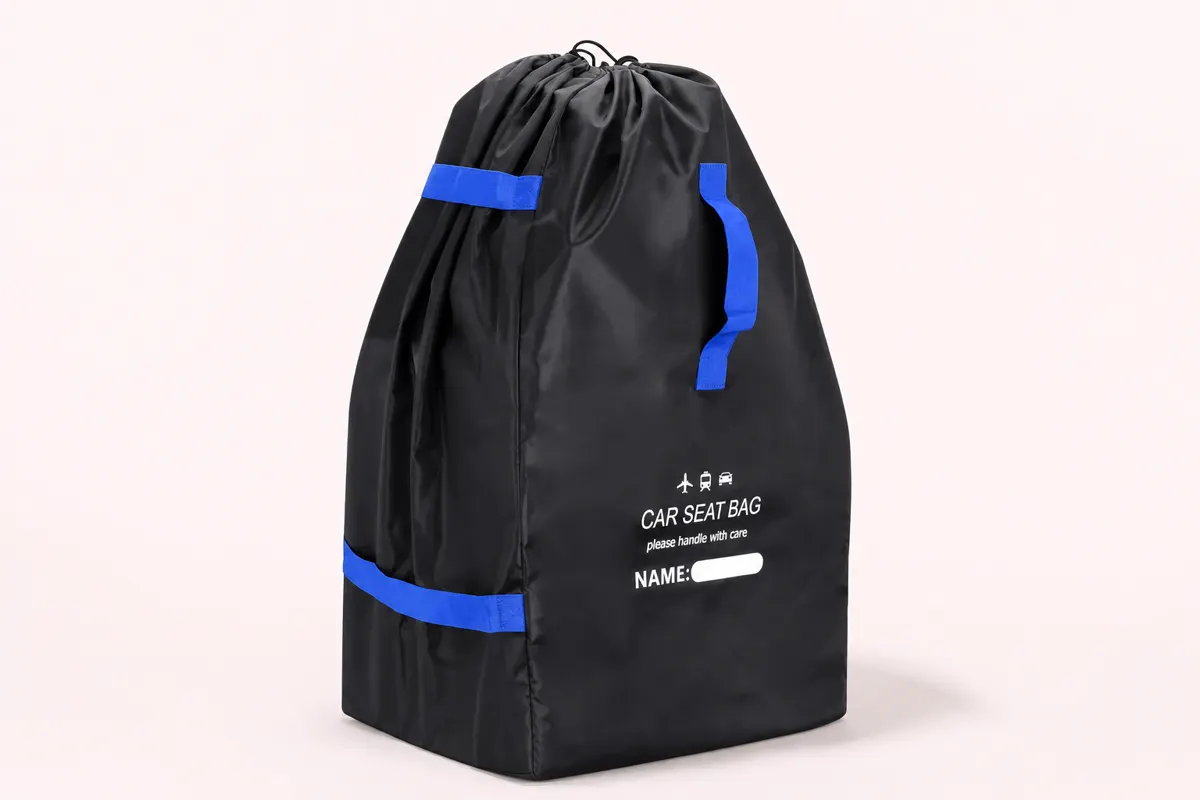
- Check that your contact card is in the NAME window. On a full flight there can be four identical-looking bagged seats at the jet bridge door.
Why I use ours at the gate specifically: the padded backpack straps mean the seat rides on my back down the jet bridge while my hands manage a boarding pass, a toddler, and a snack cup. When I land, the empty bag folds into its built-in pouch and disappears into the diaper bag. Black with blue straps, $24.95 — details and sizing on the product page, buyer photos on the reviews page.
Step 3: drop it at the end of the jet bridge
Board with the bagged, tagged seat and carry it down the jet bridge. At the aircraft door there is a designated spot — usually left of the door or at the bottom of the stairs on regional jets — where strollers and gate-checked items collect. Set the seat down there, snap a quick photo of it (thirty seconds of insurance for any damage claim), and board.
Do not hand it to a flight attendant and do not leave it in the terminal at the podium. It goes where the strollers go.
Step 4: reclaim it on arrival
Here is the part nobody explains: gate-checked does not always mean gate-returned. On most domestic flights, the seat comes back up to the jet bridge within a few minutes of arrival — wait just outside the aircraft door with the stroller parents. But on some airlines, at some airports, and on most international arrivals, gate-checked items are sent to baggage claim instead. Ask a flight attendant before landing so you are waiting in the right place.
How to gate check a car seat without the five mistakes I see at every gate
| Mistake | What happens | Do this instead |
|---|---|---|
| No bag at all | Scuffs, snagged harness, wet fabric, lost parts | Any bag beats none; a strapped bag beats any |
| Waiting until boarding for the tag | Stuck at the podium while your group boards | Get the tag at check-in or on gate arrival |
| Loose accessories left on | Cup holders and toys vanish in the hold | Strip the seat, pocket the parts |
| Drawstring left open | Bag slides off; rain gets in | Cinch fully, knot once |
| Standing at the jet bridge when items went to claim | Twenty stressful minutes with a tired toddler | Ask the crew before landing where items return |
Gate check vs counter check: quick verdict
Gate check when you want the seat available until boarding, or when your child naps in it at the gate. Counter check when you would rather cross the airport hands-free and you will not need the seat for hours. Protection matters slightly more at the counter, since the seat takes the full conveyor journey — if you check monthly, consider whether a thicker padded bag fits your needs in my honest bag comparison.
Traveling with a stroller too? Same tag, same drop spot, slightly different bag — the full routine is in the stroller gate check guide, and the stroller travel bag is one size, 44.88 x 20.86 x 12.20 inches.

Dana Whitfield · Family Travel Writer
Mom of two, 60+ flights with car seats in tow.